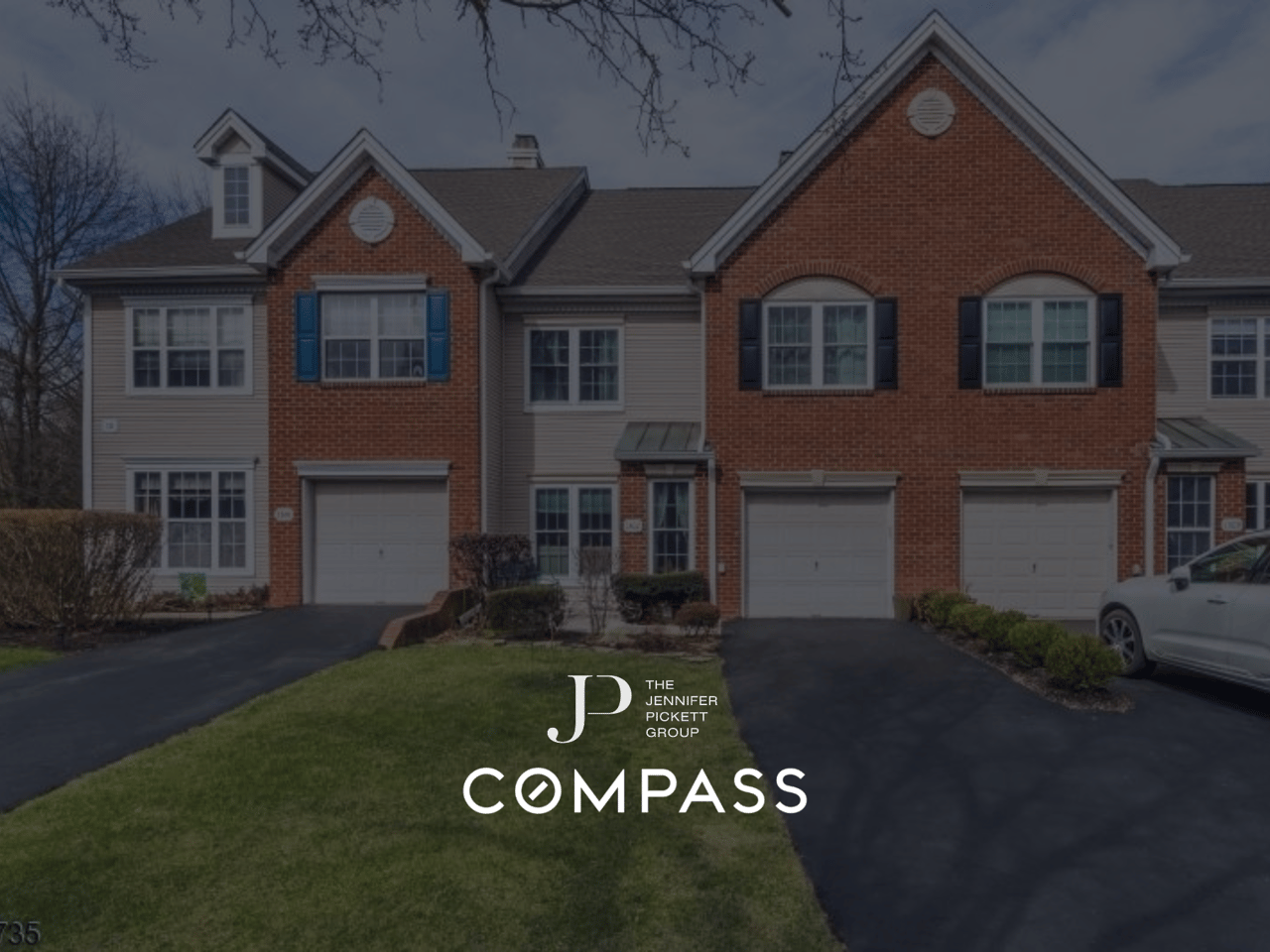
When searching for a home in Morris County, you may come across properties in communities with homeowners associations, condominium associations, or other shared ownership arrangements.
These communities can offer attractive benefits. Some include exterior maintenance, landscaping, snow removal, recreational facilities, and shared amenities that make everyday homeownership more convenient.
But there's another side to the decision.
Buying a home in an association-managed community means agreeing to certain rules, financial responsibilities, and shared decisions. Your monthly or quarterly association fee is only one part of the picture. The governing documents, financial health of the association, maintenance responsibilities, and possibility of future assessments can all affect your experience as a homeowner.
Before making an offer on a townhome, condominium, or property in a planned community, it's important to understand exactly what you're buying into.
Here's what Morris County homebuyers should know.
1. Understand the Difference Between an HOA and a Condo Association
The terms HOA and condo association are sometimes used interchangeably, but they don't necessarily describe the same ownership structure.
Homeowners associations
A homeowners association, or HOA, typically manages shared spaces and community standards within a residential development.
Depending on the community, homeowners may own their individual houses and lots while sharing responsibility for common areas such as:
- Private roads and sidewalks
- Community entrances and landscaping
- Walking paths and open spaces
- Swimming pools and recreational facilities
- Clubhouses and gathering areas
- Shared parking areas
The association collects fees from homeowners to fund the services and responsibilities outlined in its governing documents.
Condominium associations
A condominium association generally manages common elements within a condominium development.
Owners typically own their individual units and share an ownership interest in common elements. These may include building exteriors, roofs, hallways, elevators, parking areas, and recreational facilities.
The association is responsible for maintaining the common elements assigned to it under the governing documents.
However, the exact division of responsibilities varies by community.
For example, one condominium association may handle exterior maintenance and landscaping, while another may have different responsibilities for windows, balconies, or certain building components.
The important takeaway: Never assume that two communities with similar monthly fees provide the same services. Review the governing documents to understand what the association actually maintains.
2. What Do HOA and Condo Fees Typically Cover?
Association fees help pay for the operation and maintenance of shared community features.
Depending on the development, fees may cover:
- Landscaping and lawn maintenance
- Snow removal
- Exterior building maintenance
- Roof maintenance or replacement
- Common-area insurance
- Pool and clubhouse maintenance
- Private road maintenance
- Trash collection
- Water or sewer services
- Management and administrative expenses
- Reserve fund contributions
Some communities provide extensive services, while others have relatively limited shared responsibilities.
This is why looking at the monthly fee alone can be misleading.
Imagine two townhomes with similar purchase prices.
One community charges a higher monthly fee but includes exterior maintenance, snow removal, landscaping, and access to recreational amenities.
The other has a lower monthly fee but requires homeowners to handle more maintenance themselves.
The lower fee does not automatically mean the second property is less expensive to own.
You need to compare the services included, the responsibilities retained by the homeowner, and the possibility of future fee increases.
3. Understand the Rules Before You Buy
One of the biggest adjustments for buyers moving into an HOA or condominium community is learning that certain property decisions may be subject to association rules.
These rules are generally established through governing documents, which may include the master deed, declaration of covenants, bylaws, and rules and regulations.
Depending on the community, restrictions may address:
Exterior modifications
Planning to change your front door, install a fence, add a patio, or make landscaping changes?
Some associations require written approval before homeowners make exterior modifications.
Even relatively small projects may need to follow architectural guidelines.
Pets
Pet policies can vary considerably.
Some communities allow pets with few restrictions, while others limit the number, size, or type of animals permitted.
If you have pets or plan to get one, review the actual rules rather than relying on a verbal explanation.
Parking
Parking rules may address:
- Assigned parking spaces
- Guest parking
- Garage use
- Commercial vehicles
- Overnight street parking
- Recreational vehicles and trailers
If a property includes a garage but limited guest parking, consider how that arrangement will work for your household.
Rentals
If you may eventually rent out the property, investigate the association's rental policies.
Some communities restrict short-term rentals, limit the number of units that can be rented, or require owners to register tenants.
These restrictions can affect your future plans and should be reviewed before purchasing.
Outdoor living spaces
Patios, decks, balconies, fences, grills, and outdoor storage may all be subject to community guidelines.
If outdoor space is an important part of your lifestyle, make sure the rules allow you to use it the way you envision.
A property can look perfect during a showing but feel very different once you understand its restrictions.
4. Look Beyond the Monthly Fee: Review the Association's Financial Health
An association fee is not simply a maintenance charge. It is part of a larger financial structure that determines how the community operates and prepares for future expenses.
Before buying, ask for the association's financial documents.
Important records may include:
- Current annual budget
- Recent financial statements
- Reserve fund information
- Recent meeting minutes
- Capital improvement plans
- Special assessment history
- Information about outstanding loans or major obligations
One of the most important things to understand is whether the association has adequate reserves.
What is a reserve fund?
A reserve fund is money set aside for major repairs and replacements involving shared property components.
Depending on the community, these expenses might include:
- Roof replacement
- Parking lot resurfacing
- Road repairs
- Exterior painting
- Building improvements
- Pool renovations
- Drainage system repairs
- Replacement of shared mechanical equipment
Routine operating expenses are different from major capital expenses.
An association may have enough money to pay for regular landscaping and maintenance but insufficient reserves for a major roof or road replacement.
When that happens, homeowners may face additional financial obligations.
Why reserve studies matter
A reserve study evaluates the condition and expected replacement costs of common-area components and helps an association plan for future expenses.
New Jersey has adopted laws addressing capital reserve studies and funding for certain planned real estate developments.
Under the applicable state framework, qualifying associations must undertake capital reserve studies and develop funding plans. Requirements and exceptions depend on the type of development and applicable statutory provisions.
For buyers, the practical lesson is straightforward: Ask whether the association has a recent reserve study, what it recommends, and whether the current funding plan is keeping pace with anticipated expenses.
5. What Is a Special Assessment?
A special assessment is an additional charge that an association may impose on homeowners to cover certain expenses beyond what its regular budget or available reserves can accommodate.
These assessments can arise when a community faces an unexpected repair, major improvement, or significant expense.
For example, imagine a condominium community discovers that its shared parking area needs substantial repairs.
If the association does not have enough money available in its reserves, it may need to consider a special assessment or another financing arrangement.
Depending on the governing documents and applicable requirements, the cost may be allocated among owners.
Special assessments can vary significantly. Some may be relatively manageable, while others can represent a substantial financial burden.
Before buying, ask:
- Has the association imposed special assessments recently?
- Are any assessments currently approved?
- Have major repairs been discussed?
- Are there upcoming capital improvements?
- Does the reserve study identify potential funding gaps?
- Are there outstanding association loans?
Reviewing recent meeting minutes can be particularly helpful because they may reveal discussions about projects that have not yet resulted in an approved assessment.
You want to understand not only what homeowners are paying today but also what expenses may be approaching.
6. Consider the Community's Maintenance Responsibilities
One of the main reasons buyers choose an association-managed property is the possibility of reduced exterior maintenance.
However, the amount of responsibility transferred to the association varies.
For example, a townhome community may maintain shared landscaping and private roads while leaving homeowners responsible for certain exterior components.
A condominium association may handle the roof and exterior walls but require individual owners to maintain their own windows, appliances, or interior systems.
Before purchasing, determine who is responsible for:
- Roof repairs and replacement
- Windows and doors
- Siding and exterior walls
- Driveways and parking spaces
- Decks and balconies
- Gutters and drainage
- Landscaping
- Snow and ice removal
- Shared plumbing or mechanical systems
This information should be confirmed through the association documents.
It is also worth looking at the physical condition of the community.
During your visit, pay attention to the condition of common areas, walkways, landscaping, parking areas, exterior surfaces, and recreational facilities.
A well-maintained property and community can tell you something about how shared spaces are being cared for, although appearance alone cannot establish the association's financial health.
7. Understand Insurance Coverage
Insurance is another important part of purchasing a home in an association-managed community.
Some associations maintain a master insurance policy covering certain shared structures or common elements.
However, that does not necessarily mean the policy covers everything inside an individual unit.
The association's governing documents and insurance policy determine the division of coverage.
Depending on the property type and policy, individual owners may still need coverage for:
- Personal belongings
- Interior improvements
- Certain fixtures
- Personal liability
- Additional living expenses
- Loss assessment coverage
Buyers should request information about the association's master insurance policy and discuss their individual coverage needs with an insurance professional.
Pay attention to policy deductibles, exclusions, and the responsibilities assigned to individual owners.
A lower personal insurance premium should never be assumed simply because the community has a master policy.
8. Evaluate the Amenities and Decide Whether You'll Actually Use Them
Many communities advertise amenities such as swimming pools, fitness centers, tennis courts, walking paths, playgrounds, and clubhouses.
These features can make a property more appealing, but they may also contribute to association expenses.
Think about which amenities genuinely fit your lifestyle.
If you enjoy swimming, a community pool may be a valuable feature.
If you work remotely, a clubhouse or shared workspace may be useful.
If you prefer outdoor activities, walking paths and recreational spaces may be more important.
But if you rarely use the available facilities, you may be paying for services that do not add much value to your everyday routine.
Also ask about:
- Seasonal operating schedules
- Guest policies
- Reservation requirements
- Additional amenity fees
- Maintenance closures
- Rules for children and visitors
The best community is not necessarily the one with the most amenities. It is the one whose services and features make sense for the way you actually live.
9. How Association Communities Fit Into Morris County Living
Morris County offers a variety of residential settings, from traditional single-family neighborhoods to condominium developments and townhome communities.
Buyers exploring communities in towns such as Morristown, Parsippany, Randolph, Denville, Florham Park, and Madison may encounter different types of shared ownership arrangements.
The appeal can vary depending on the property and community.
Some buyers prefer townhomes because they want less exterior maintenance than a traditional detached home.
Others appreciate condominium living because they want a more manageable property with shared building responsibilities.
Some buyers prioritize recreational amenities, while others simply want a community where landscaping and snow removal are handled through an association.
When comparing properties, consider the complete lifestyle and financial arrangement.
A townhome with a modest fee and limited services may be very different from a condominium community with extensive shared amenities and building maintenance.
Look at the association's responsibilities, the condition of the development, the location, and the overall cost of ownership.
10. Documents to Request Before Buying
Association documents are an important part of the due diligence process.
Your real estate agent and attorney can help identify which records should be requested and reviewed for the specific property.
Depending on the community, useful documents may include:
Governing documents
- Master deed or declaration
- Bylaws
- Rules and regulations
- Amendments and restrictions
Financial documents
- Current annual budget
- Recent financial statements
- Reserve fund information
- Capital reserve study
- Special assessment notices
Community records
- Recent board meeting minutes
- Upcoming capital improvement plans
- Maintenance schedules
- Insurance information
- Notices of pending repairs or projects
Property-specific information
- Current association fee
- Outstanding assessments
- Payment status
- Transfer or administrative fees
- Any known violations or unresolved issues
For certain planned real estate developments in New Jersey, state law also addresses reserve study and funding disclosures. Buyers should ask whether any required notices concerning anticipated assessments or reserve funding decisions apply to the community.
Do not wait until the final days before closing to begin reviewing these records.
The earlier you understand the association's financial and operational condition, the more time you have to ask questions and evaluate the property.
11. Questions to Ask Before Making an Offer
If you're considering a home in an HOA or condominium community, keep these questions in mind:
- What is the current monthly or quarterly association fee?
- What services and utilities are included?
- Which maintenance responsibilities belong to the association?
- Which responsibilities belong to the individual homeowner?
- Have association fees increased in recent years?
- Are there any approved or anticipated special assessments?
- Does the association have a recent reserve study?
- Are there outstanding loans or major financial obligations?
- What are the pet and parking restrictions?
- Are rentals permitted, and are there restrictions?
- What exterior modifications require approval?
- What does the master insurance policy cover?
- Are there major repairs or improvements planned?
- Are there any pending lawsuits or significant insurance claims?
- Are there additional fees due at closing?
The answers can help you determine whether the community is financially and practically suitable for your needs.
Finding the Right Community Is Just as Important as Finding the Right Home
An HOA or condominium community can offer convenience, shared amenities, and a different approach to homeownership.
For some Morris County buyers, that arrangement is exactly what they want. They may prefer spending less time managing exterior maintenance or enjoy having access to shared recreational spaces.
For others, the restrictions, recurring fees, and shared financial responsibilities may not be the right fit.
Neither choice is automatically better.
What matters is understanding the arrangement before you commit.
When exploring townhomes, condominiums, or planned communities in Morris County, look beyond the photos and asking price. Review the association documents, understand the financial obligations, and consider whether the rules and services fit your lifestyle.
A home should make sense not only when you move in but also throughout the years you own it.
Thinking about buying a townhome or condominium in Morris County or elsewhere in North Jersey? Jennifer Pickett can help you evaluate your options, ask the right questions, and navigate the details of your home search.
Frequently Asked Questions
Are HOA fees included in a mortgage payment?
Usually, association fees are separate from the monthly mortgage payment. Buyers should include them in their overall monthly housing budget. Some mortgage lenders may account for these fees when evaluating a borrower's financial obligations.
Can an HOA increase its monthly fees?
Yes. Association fees can change based on operating expenses, maintenance needs, insurance costs, reserve funding, and other factors. Review the association's budget and financial history to understand how fees have changed.
Can an HOA restrict pets in New Jersey?
Association rules may include reasonable pet restrictions, subject to applicable laws and requirements. Review the community's governing documents before purchasing if you have pets.
What happens if an HOA does not have enough money for major repairs?
The association may need to consider a special assessment, financing, or other measures permitted by its governing documents and applicable law. This is why reserve funding and financial records matter.
Can I make renovations to a townhome in an HOA community?
It depends on the community's rules and the type of renovation. Interior improvements may have different requirements from exterior changes. Projects involving shared structures or common elements may require association approval.
Should I review HOA documents before buying?
Absolutely. The governing documents, budgets, reserve information, meeting minutes, and insurance records can help you understand the community's rules, financial condition, and maintenance responsibilities before completing your purchase.