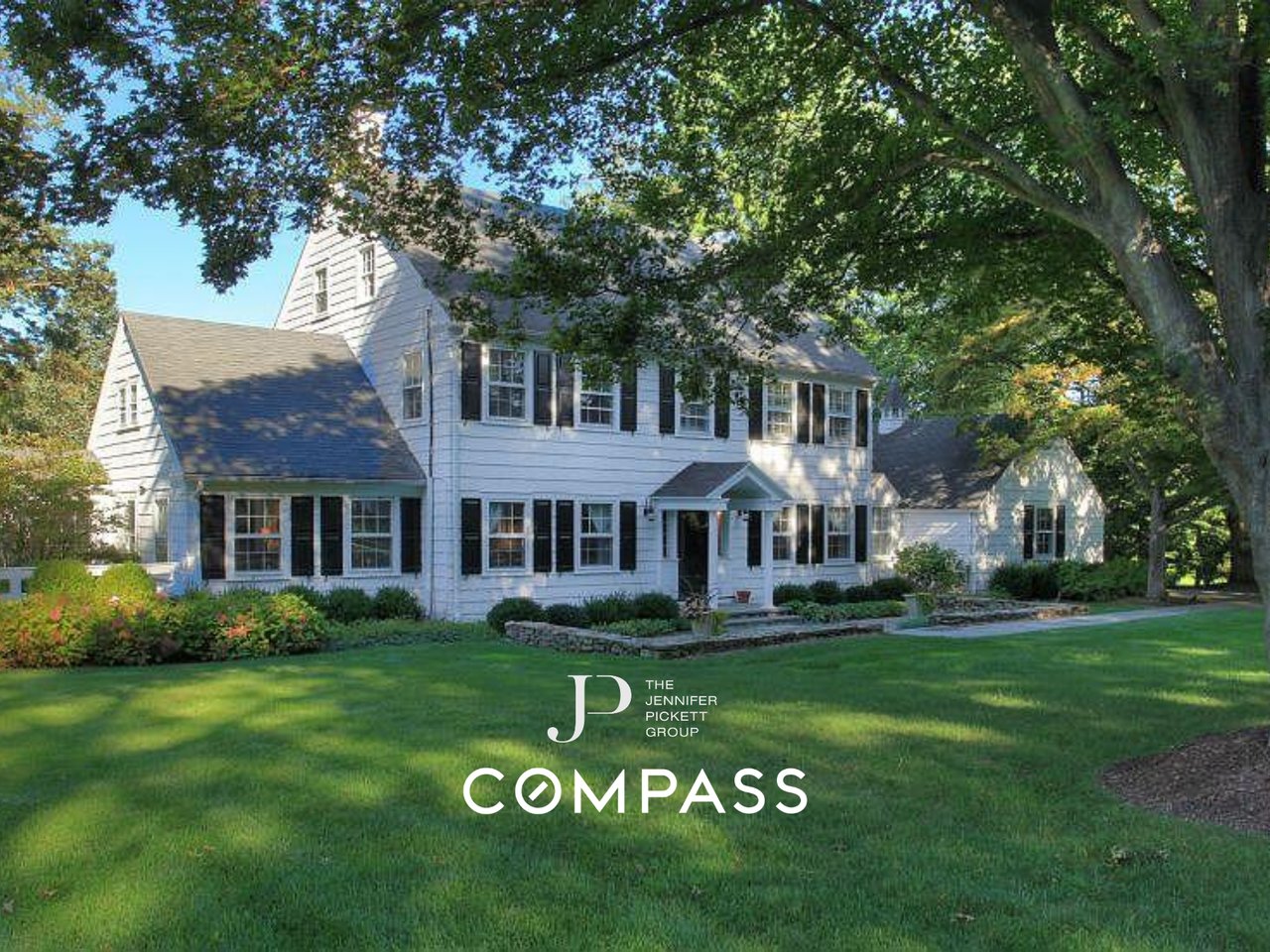
When a Morris County home is listed “as-is,” many buyers immediately wonder whether that means they are agreeing to take the property exactly as they see it—with no inspections, no negotiations, and no opportunity to ask questions.
That isn't necessarily what “as-is” means.
The phrase can have important implications for a buyer, but it doesn't automatically mean you should walk away from the property. In some cases, an as-is home can be an opportunity to purchase a property in a desirable Morris County neighborhood at a price that reflects its condition.
The key is understanding what you are actually agreeing to and doing the right due diligence before moving forward.
What Does “As-Is” Mean in a New Jersey Home Sale?
Generally, an “as-is” sale means the seller is not agreeing to make repairs or improvements to the property as part of the sale.
The property is being offered in its current condition, and the buyer should evaluate the home carefully before committing to the purchase.
But “as-is” shouldn't be interpreted as:
- You aren't allowed to inspect the property.
- You cannot ask questions about its condition.
- You must ignore problems you discover.
- The seller can necessarily conceal known issues.
- You automatically have to accept every condition without understanding the transaction.
The exact rights and obligations depend on the contract and circumstances of the transaction, which is one reason having the right professionals involved matters.
Why Are Some Morris County Homes Sold As-Is?
There are several reasons a property might be marketed this way.
An older home may need updating. A property could have deferred maintenance, outdated systems, or cosmetic improvements that the seller doesn't want to complete before listing.
Other times, the seller simply doesn't want to negotiate repairs.
This can be particularly relevant in parts of Morris County where buyers encounter a wide range of housing stock—from older Colonials and Capes to renovated homes and newer construction.
An as-is listing isn't automatically a bad property.
The question is whether the home's condition makes sense for the price and for your plans.
Can You Still Have a Home Inspection?
Buyers should not assume that “as-is” means an inspection isn't worthwhile.
In fact, an inspection can be especially important when you're considering a property being sold in its current condition.
A professional inspection can help identify issues involving areas such as:
- Roof condition
- Foundation
- Electrical systems
- Plumbing
- Heating and cooling
- Water intrusion
- Structural concerns
- Attic and basement conditions
- Windows and doors
- Drainage
- General maintenance
An inspection doesn't guarantee that every problem will be discovered, but it can give you significantly more information before you move forward.
Does “As-Is” Mean You Can't Negotiate?
Not necessarily.
One of the biggest misconceptions buyers have is that an as-is listing means the price is completely non-negotiable.
The seller may have made it clear that they don't intend to make repairs, but that doesn't necessarily prevent a buyer from considering the overall terms of the transaction.
For example, depending on the circumstances, negotiations could involve the purchase price or other contractual terms.
The important distinction is this:
You may be negotiating the economics of the transaction rather than asking the seller to renovate the property for you.
That is something your real estate agent and attorney can help you evaluate based on the specific property and contract.
Look Beyond Cosmetic Problems
One of the most important things buyers can do when considering an as-is property is separate cosmetic issues from potentially expensive problems.
Old wallpaper, dated cabinets, worn carpeting, or unattractive paint may be relatively straightforward to address.
A roof nearing the end of its useful life, significant water intrusion, structural concerns, or an aging mechanical system can be a very different conversation.
This is where buyers need to look beyond what photographs and staging show.
Ask yourself:
“If I changed nothing about this house for the first year, what would I need to address?”
That question can reveal a lot.
Don't Forget About the Basement
Basements deserve particular attention when evaluating an older Morris County home.
Look for signs such as:
- Musty odors
- Water staining
- Efflorescence
- Cracks
- Dampness
- Evidence of previous water intrusion
- Improper drainage
- Aging mechanical equipment
A finished basement can look fantastic during a showing, but buyers should still understand what's behind the finished walls and beneath the flooring whenever possible.
A beautiful finished space doesn't eliminate the importance of evaluating the underlying property.
Older Morris County Homes Require More Questions
Morris County has many communities with homes that are decades—or even more than a century—old.
That character can be one of the area's greatest attractions.
But older homes can also come with features that buyers need to investigate carefully.
Depending on the property, buyers may encounter:
- Oil heating
- Underground or above-ground oil tanks
- Older electrical systems
- Private wells
- Septic systems
- Older plumbing
- Historic construction
- Additions or renovations completed at different times
- Older roofing or drainage systems
None of these automatically makes a home a bad purchase.
They simply mean that the buyer should understand what they're buying.
What Should You Ask Before Buying an As-Is Home?
Before making an offer—or as part of your due diligence—consider questions such as:
How old is the roof?
A roof replacement can be a significant expense, so understanding its approximate age and condition is valuable.
How old are the heating and cooling systems?
Ask what systems serve the property and whether there are maintenance records available.
Have there been previous water problems?
This is particularly important in basements, crawl spaces, and areas around additions.
Have renovations been completed?
If the home has been significantly renovated, buyers may want to understand what work was performed and whether appropriate permits were obtained.
Is there an underground oil tank?
This can be particularly important in older New Jersey homes.
Does the property use a well or septic system?
If so, additional property-specific due diligence may be appropriate.
Are there known defects or recurring maintenance issues?
The more information you can gather before committing, the better positioned you are to make an informed decision.
Think About Your Budget Beyond the Purchase Price
An as-is property can sometimes look attractive because of its asking price.
But the purchase price is only part of the financial picture.
Imagine two homes are both listed at $650,000.
One has been recently renovated and has newer major systems.
The other needs a roof, HVAC replacement, electrical work, and significant cosmetic updating.
They may have the same asking price, but they aren't necessarily the same financial proposition.
That's why I encourage buyers to think in terms of total cost of ownership, not simply the listing price.
Before purchasing, consider what you may realistically spend during the first one to five years.
Don't Assume Every Problem Has to Be Fixed Immediately
Another mistake buyers make is assuming that every imperfection needs to be corrected immediately.
Some projects can wait.
A dated bathroom may be perfectly functional for several years.
You might be able to live with an older kitchen while saving for a renovation.
A cosmetic issue may not affect your ability to enjoy the home at all.
The goal isn't to find a house with absolutely nothing wrong with it.
The goal is to understand the property's condition well enough to decide whether it works for you.
When Could an As-Is Home Be Worth Considering?
An as-is property may make sense when:
- The location is exactly what you want.
- The floor plan works for your lifestyle.
- The home's major systems are reasonably understood.
- The necessary improvements fit your budget.
- The asking price reflects the property's condition.
- You have enough financial reserves for unexpected expenses.
- You're comfortable taking on some renovation or maintenance work.
For some buyers, an imperfect home in the right neighborhood can ultimately be more appealing than a turnkey property in a location they don't love.
When Should You Slow Down?
There are also situations where buyers should take a step back.
Be cautious if you don't understand the property's major systems, if inspections reveal significant issues you cannot comfortably afford, or if the numbers only work assuming everything goes perfectly.
You should also be careful about becoming emotionally attached to a property before understanding its potential costs.
A house can have beautiful curb appeal, a fantastic kitchen, and a desirable location—but if the underlying numbers don't work for your situation, it's worth reconsidering.
The Neighborhood Still Matters
One advantage of buying in Morris County is the variety of communities and housing options available.
An as-is home may be worth considering because of something you cannot renovate:
location.
You can change paint.
You can renovate a kitchen.
You can replace flooring.
You can't move the property closer to the train station, change its surrounding street, or recreate the character of an established neighborhood.
That's why evaluating an as-is home requires looking at both the property and the location.
Jennifer's Local Tip
When I show buyers an as-is property, I encourage them to resist the temptation to immediately ask, “How much would it cost to make this house perfect?”
Instead, start with:
“What would it cost to make this house comfortable, safe, and functional for us?”
Those are very different questions.
You don't necessarily need a completely renovated home on day one. What matters is understanding which improvements are essential, which can wait, and whether the overall investment makes sense for your goals.
That's where having an experienced local real estate professional can be valuable. The right conversation isn't simply about whether a house needs work—it's about whether the price, condition, location, and future plans make sense together.
Thinking About Buying in Morris County?
If you're looking at homes in Morristown, Madison, Chatham, Denville, Randolph, Morris Township, or other Morris County communities, don't let the words “as-is” automatically scare you away.
At the same time, don't let a great-looking house convince you to overlook important questions.
Understand the property. Understand the potential costs. Understand the neighborhood. Then decide whether the opportunity makes sense for you.
A knowledgeable Morris County real estate agent can help you identify the questions worth asking, coordinate the appropriate professionals, and keep the transaction moving while you evaluate the property.
Frequently Asked Questions
Can I inspect an as-is home in New Jersey?
An as-is listing does not automatically mean a buyer should skip an inspection. The inspection process and contractual rights should be discussed with your real estate agent and attorney.
Can I negotiate the price on an as-is home?
An as-is designation doesn't necessarily mean that the purchase price can never be negotiated. The seller's position and the circumstances of the transaction matter.
Is buying an as-is house risky?
It can carry additional risk if the property's condition is not well understood. Thorough due diligence can help a buyer better evaluate that risk.
Are older Morris County homes usually sold as-is?
Not necessarily. Morris County has a mixture of older, renovated, and newer homes. Some sellers of older properties may choose to sell without making repairs, but each property should be evaluated individually.
Should I avoid an as-is home?
Not automatically. An as-is property can sometimes be an excellent opportunity if the condition, price, location, and expected improvement costs align with your goals.