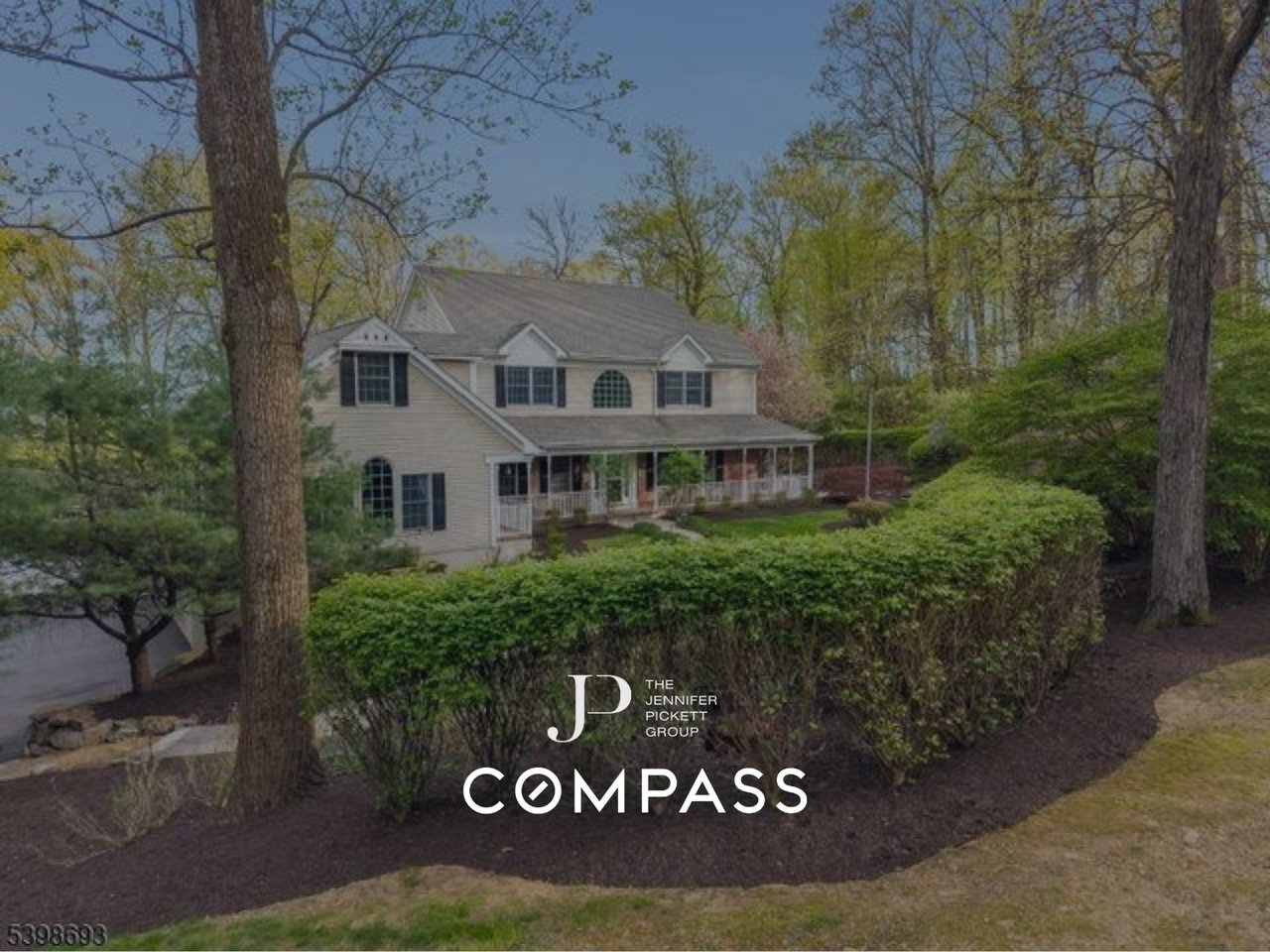
Privacy is one of those qualities buyers often recognize before they can put it into words.
You pull into the driveway and immediately notice that the house feels tucked away.
Or perhaps the opposite happens.
The home itself is beautiful, but you can see directly into the neighbor's kitchen from the living room. The backyard feels exposed. Cars pass close to the property. A neighboring house sits just a few feet away.
None of these things necessarily makes a home a bad purchase.
But they can dramatically affect how comfortable the property feels once you live there.
For buyers searching throughout Morris County, privacy can be an especially important consideration. The county includes everything from walkable downtown neighborhoods and established suburban streets to wooded properties, larger lots, cul-de-sacs, and homes with substantial natural landscaping.
The key is understanding that privacy isn't simply about lot size.
A smaller property can feel remarkably private with the right landscaping and orientation, while a large lot can still feel exposed depending on the home's position, neighboring properties, roads, and terrain.
Here's what Morris County buyers should look at when evaluating privacy.
Privacy Starts With the View From the Windows
During a showing, buyers naturally look out the windows.
But instead of simply asking whether you like the view, take a closer look.
What exactly are you seeing?
Can you see directly into another home?
Are neighboring windows facing yours?
Is the backyard visible from the street?
Can pedestrians see into the first-floor rooms?
Does the property overlook another yard?
These details can become much more noticeable after you move in.
A house may have beautiful finishes and a wonderful layout, but if your preferred living room has a direct view into the neighbor's dining room, you may eventually find yourself keeping the blinds closed.
That's why privacy should be evaluated from inside the home as well as outside it.
Don't Assume a Large Lot Automatically Means Privacy
A large lot can certainly provide more separation.
But acreage alone doesn't guarantee privacy.
Consider two properties.
The first sits on one acre but has neighboring homes positioned relatively close to the house.
The second sits on half an acre but has mature trees, natural screening, and a home positioned farther from the road.
The smaller property might actually feel more private.
This is why buyers should pay attention to how the land is used, not simply how many square feet the lot contains.
Look at:
- House placement
- Neighboring homes
- Tree coverage
- Fencing
- Landscaping
- Elevation
- Driveway location
- Road exposure
- Backyard orientation
The combination of these features creates the feeling of privacy.
Mature Landscaping Can Make a Major Difference
Mature trees and landscaping are often one of the biggest contributors to privacy.
A row of established trees can create separation between properties.
Evergreens can provide year-round screening.
Shrubs can soften views from the street.
A mature hedge can create a natural boundary without the appearance of a solid fence.
But buyers should also remember that landscaping changes throughout the year.
A backyard that feels completely screened in July may look considerably more open after the leaves fall.
If privacy is important to you, try to imagine the property during all four seasons.
Think About Winter Privacy
This is particularly important in New Jersey.
Deciduous trees can provide tremendous privacy during spring and summer.
But once those leaves disappear, the property may look very different.
During a winter showing, you may suddenly notice:
- Neighboring windows
- Roads behind the property
- Nearby houses
- Utility structures
- Parking areas
- Other features previously hidden by foliage
That doesn't necessarily mean the property lacks privacy.
It simply means you should understand what the property looks like without its summer screening.
The Position of the House Matters
Two houses on similarly sized lots can have completely different privacy levels depending on where they're positioned.
A house set farther back from the road may feel more secluded.
A home positioned toward the rear of a lot may have more front-yard separation but less backyard privacy.
A corner property may have additional road exposure.
A home located at the end of a cul-de-sac may have less passing traffic but potentially more visibility from neighboring homes.
When you're walking through a property, look at the relationship between the house and everything around it.
Where is the house sitting within the lot?
That's often more important than the lot size alone.
Pay Attention to the Backyard
Buyers often imagine the backyard as their private outdoor retreat.
But don't just stand in the middle of the yard and look at the grass.
Look outward.
What do you see?
Are neighboring decks elevated above yours?
Can you see into other yards?
Is there a road behind the property?
Are there homes on higher ground?
Is the backyard enclosed?
Could a future homeowner remove existing landscaping?
These questions can help you understand how private the yard really is.
Privacy Can Come From Elevation
Topography can play a surprisingly important role.
A home positioned higher than surrounding properties may feel more private even without extensive fencing.
A home at the bottom of a slope may have a completely different experience.
Elevation can affect:
- Sightlines
- Backyard visibility
- Road noise
- Neighboring views
- Drainage
- Landscaping options
This is another reason buyers shouldn't evaluate a property solely from the listing photographs.
You need to physically experience the site.
Don't Forget About the Driveway
Your driveway isn't just where you park.
Its location can affect privacy too.
A driveway that runs along the side of the property may create a different relationship with neighbors than one positioned directly between two homes.
Think about:
- Where visitors approach the house
- Whether cars are visible from the living spaces
- Whether headlights shine toward the house
- How close the driveway is to neighboring properties
- Whether the garage faces the street
- Whether delivery vehicles pass close to outdoor areas
These are small details.
But they're details you'll experience repeatedly.
Street Exposure Can Change How a Home Feels
A home on a quiet residential street can feel very different from one located on a busier road.
Even if the house itself is beautiful, traffic can affect the sense of privacy.
During a showing, listen.
Don't just look.
Can you hear:
- Cars accelerating?
- Trucks?
- School buses?
- Pedestrians?
- Nearby businesses?
- Emergency vehicles?
- Neighbors using outdoor spaces?
Visit at more than one time of day when possible.
A street that feels peaceful at 11 a.m. on a Sunday may feel completely different at 5:30 p.m. on a weekday.
Fences Aren't Always the Answer
A fence can certainly increase privacy, but buyers shouldn't assume that adding one is always simple.
There may be:
- Local zoning requirements
- Height restrictions
- Property-line considerations
- HOA rules
- Neighbor considerations
- Existing easements
- Landscaping constraints
If you're purchasing a home specifically because you envision installing a privacy fence, investigate whether your plans are feasible before assuming the project will be straightforward.
What About Privacy From the Second Floor?
Privacy isn't just a first-floor issue.
Walk upstairs and look outside the bedrooms.
Can you see neighboring bedrooms?
Can neighbors see into yours?
Are there houses positioned at a similar elevation?
This can matter more than buyers expect.
A home may feel very private from the backyard but surprisingly exposed from an upstairs bedroom.
Privacy and Natural Light Can Sometimes Compete
Here's an interesting trade-off.
Large windows can bring beautiful natural light into a home.
But those same windows can reduce privacy.
A buyer may love a wall of windows overlooking a backyard until they realize the neighboring house has a direct line of sight into the room.
Fortunately, there are many ways homeowners can balance light and privacy.
Depending on the property, options may include:
- Window treatments
- Landscaping
- Privacy plantings
- Exterior screening
- Frosted or specialty glass
- Interior layout adjustments
The important thing is to recognize the issue before purchasing.
Privacy Isn't the Same as Isolation
This is an important distinction.
Some buyers want complete seclusion.
Others simply want enough separation to feel comfortable in their home.
For example, a buyer may love being able to walk to a downtown restaurant but still want a backyard where they don't feel like they're sitting in the middle of a crowd.
Another buyer may prefer a wooded property where neighboring homes are barely visible.
Neither preference is right or wrong.
Privacy is a lifestyle preference.
The goal is to find the level of privacy that matches the way you want to live.
Think About Outdoor Entertaining
If you enjoy entertaining, privacy can become even more important.
Imagine having friends over for dinner on the patio.
Do you want to feel like you're in your own outdoor space?
Or are you comfortable being visible to the neighbors?
Think about:
- Patio location
- Deck orientation
- Outdoor kitchen
- Pool placement
- Fire pit
- Lawn
- Neighboring decks
- Street visibility
A backyard that looks large on an MLS listing may feel very different once furniture, guests, and outdoor activities are added.
What About Pools?
If you're considering installing a pool—or buying a property that already has one—privacy deserves additional attention.
Pool areas often become one of the most heavily used outdoor spaces during warmer months.
Before buying, consider:
- Visibility from neighboring properties
- Fence requirements
- Landscaping
- Pool orientation
- Nearby roads
- Neighboring decks
- Future screening possibilities
Don't assume landscaping alone will provide the privacy you want.
Privacy Can Affect Resale Appeal
Privacy is also worth considering from a long-term perspective.
Not every buyer prioritizes it.
But a home with attractive natural screening, a thoughtfully positioned backyard, and a comfortable sense of separation can appeal to many future buyers.
That doesn't mean you should purchase a home solely because you think it will be easier to resell.
Your home should work for you first.
But when comparing otherwise similar properties, privacy can be one of those qualities that contributes to how a home feels.
And how a home feels can influence how buyers respond to it.
What Buyers Should Look for During a Showing
If privacy matters to you, add a few questions to your showing routine.
Look out every major window.
What do you see?
Walk to the property boundaries.
Don't stay near the house.
Look back toward the home.
How visible is it from the yard?
Look toward neighboring properties.
What can you see?
Visit the property at different times.
Morning and evening can feel very different.
Consider winter.
What will the property look like without leaves?
Listen.
Noise can affect privacy just as much as visibility.
Look beyond the property line.
A home's privacy depends partly on what surrounds it.
Jennifer's Local Tip
When buyers tell me they want a “private” home, I always ask them what private actually means to them.
Does it mean not seeing the neighbors?
Does it mean having a backyard where you can entertain?
Does it mean being away from traffic?
Does it mean having mature trees?
Or does it simply mean not feeling like you're living on top of the house next door?
Those are very different things.
Morris County has a wide range of properties, so buyers don't necessarily have to choose between privacy and convenience.
The right property may simply require understanding what you're willing to trade.
Maybe you want a walkable downtown but are comfortable with closer neighbors.
Maybe you'd rather drive a few extra minutes for a wooded lot.
Maybe you don't need acreage at all—you just want mature landscaping and a well-positioned backyard.
The best home is the one where the property's surroundings support the way you actually want to live.
Frequently Asked Questions
How can I tell if a home is private during a showing?
Look at the property from inside and outside the home. Check sightlines from windows, the backyard, driveway, and neighboring properties. Also consider noise, road exposure, landscaping, fencing, and elevation.
Does a larger lot always mean more privacy?
No. Privacy depends on the property's layout, surrounding homes, landscaping, elevation, road exposure, and house placement—not simply acreage.
Are wooded lots more private?
They can be, but not always. Buyers should evaluate the density and location of the trees, seasonal changes, neighboring properties, maintenance requirements, and sightlines.
Will trees provide privacy in winter?
Deciduous trees lose their leaves, so a property may have significantly different sightlines during winter. Evergreen landscaping can provide more consistent year-round screening.
Can I add a privacy fence after buying a home?
Potentially, but local zoning requirements, property boundaries, easements, HOA rules, and other restrictions may apply. Buyers should verify requirements before planning the project.
Does privacy affect a home's value?
It can contribute to a property's appeal, but its importance varies by buyer. Privacy should be evaluated alongside location, condition, layout, lot, and other property characteristics.